
How We Got Here
Understanding the Financial History of Lake Country School
School funding is complex, and the financial position Lake Country School is in today developed over many years — not overnight.
This page provides additional context, using publicly presented district data, to help our community understand the decisions, timing, and factors that shaped where we are now. This information is shared to increase transparency and understanding — not to assign blame.
A Long-Term Structural Challenge
For many years, Lake Country School operated under financial conditions that became increasingly difficult to sustain.
Like districts across Wisconsin, Lake Country School faced:
State funding that did not keep pace with inflation
Rising costs for staffing, benefits, transportation, and mandated services
At the same time, local structural decisions — particularly around staffing levels and post-employment benefits — played a meaningful role in shaping today’s financial reality.
These pressures accumulated gradually and were not immediately visible in a single year, but their impact grew over time.
What the District’s Own Data Shows
In December 2025, the district publicly presented a Financial State of the District report that included analysis showing how earlier structural decisions affected today’s fund balance.
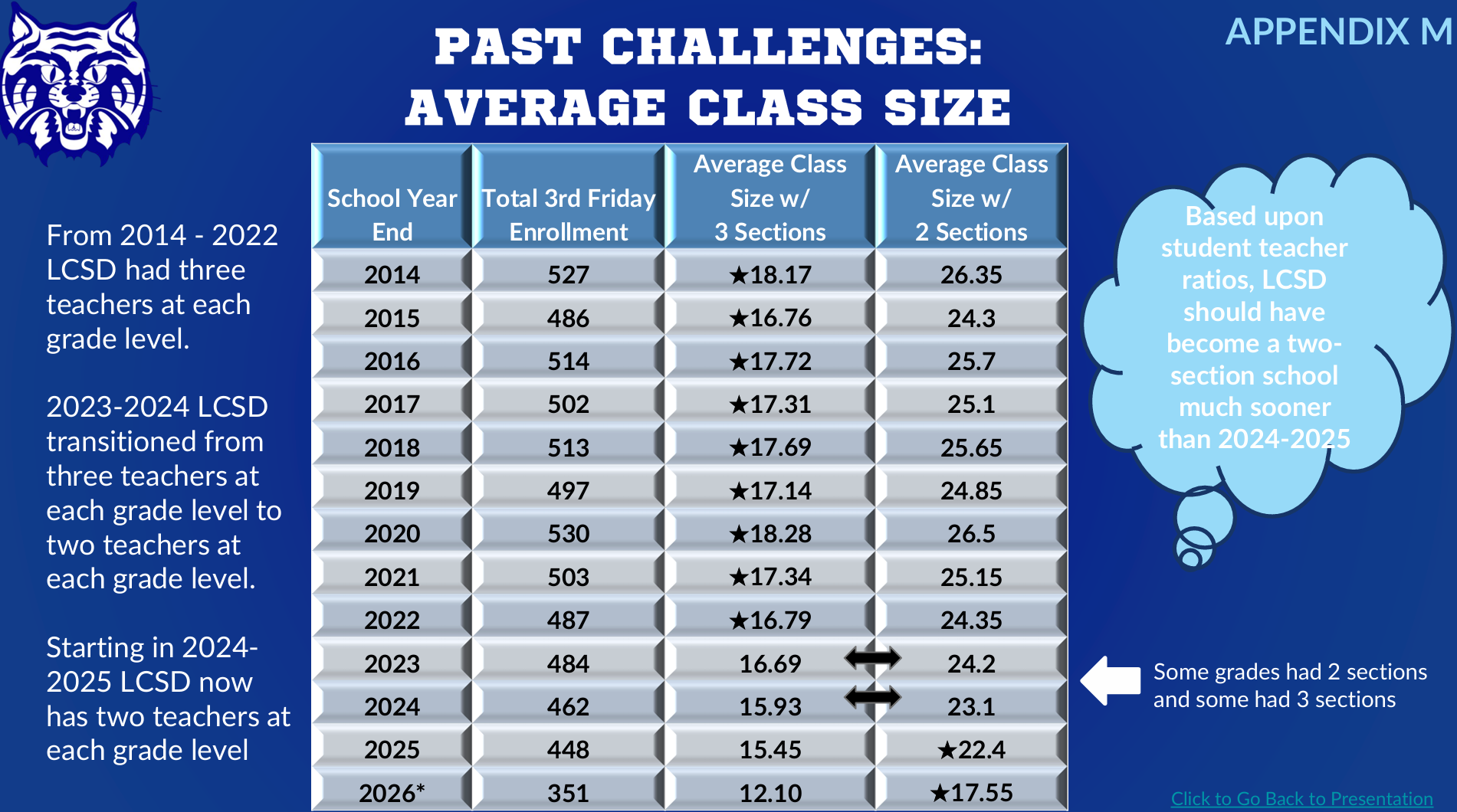
Source: Lake Country School District, “Financial State of the District” presentation, December 2025
This chart shows that based on enrollment trends, Lake Country School should have transitioned to a two-section model earlier than it did. Remaining a three-section school longer than enrollment supported resulted in higher staffing costs that compounded over time.
Earlier Section Adjustments — Financial Impact
As presented by the district, if staffing adjustments had been made earlier — either by the 2017–18 or 2020–21 school years — the district’s fund balance would be significantly stronger today. These scenarios use historic actual revenues and expenditures and illustrate how timing mattered.
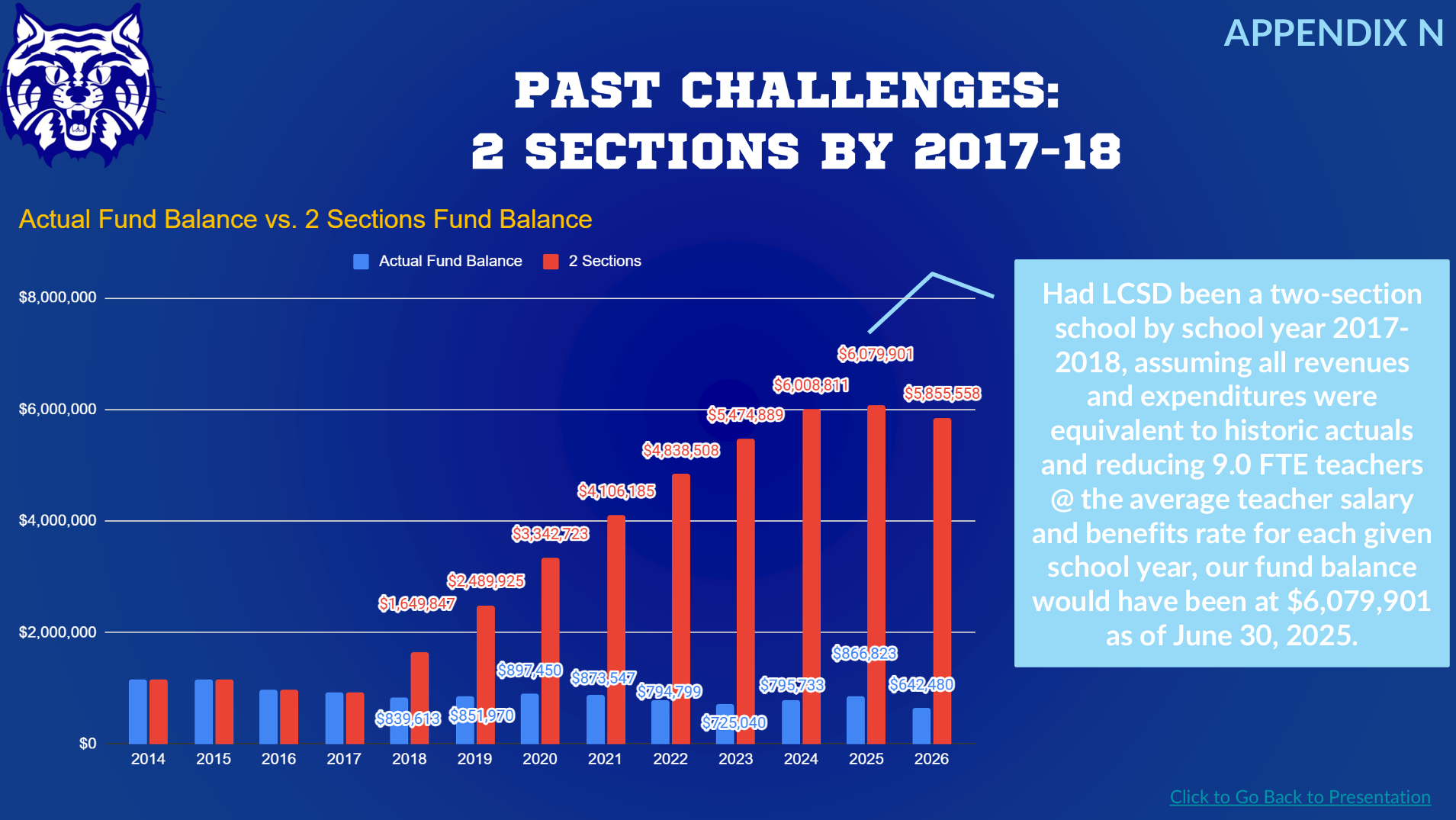
Source: Lake Country School District, “Financial State of the District” presentation, December 2025
Post-Employment Benefits (OPEB)
The district also identified long-standing post-employment benefit obligations as a major cost driver. Had these obligations been eliminated earlier, the fund balance would again be substantially stronger today. These benefits have since been sunset, but their financial impact accumulated over many years.
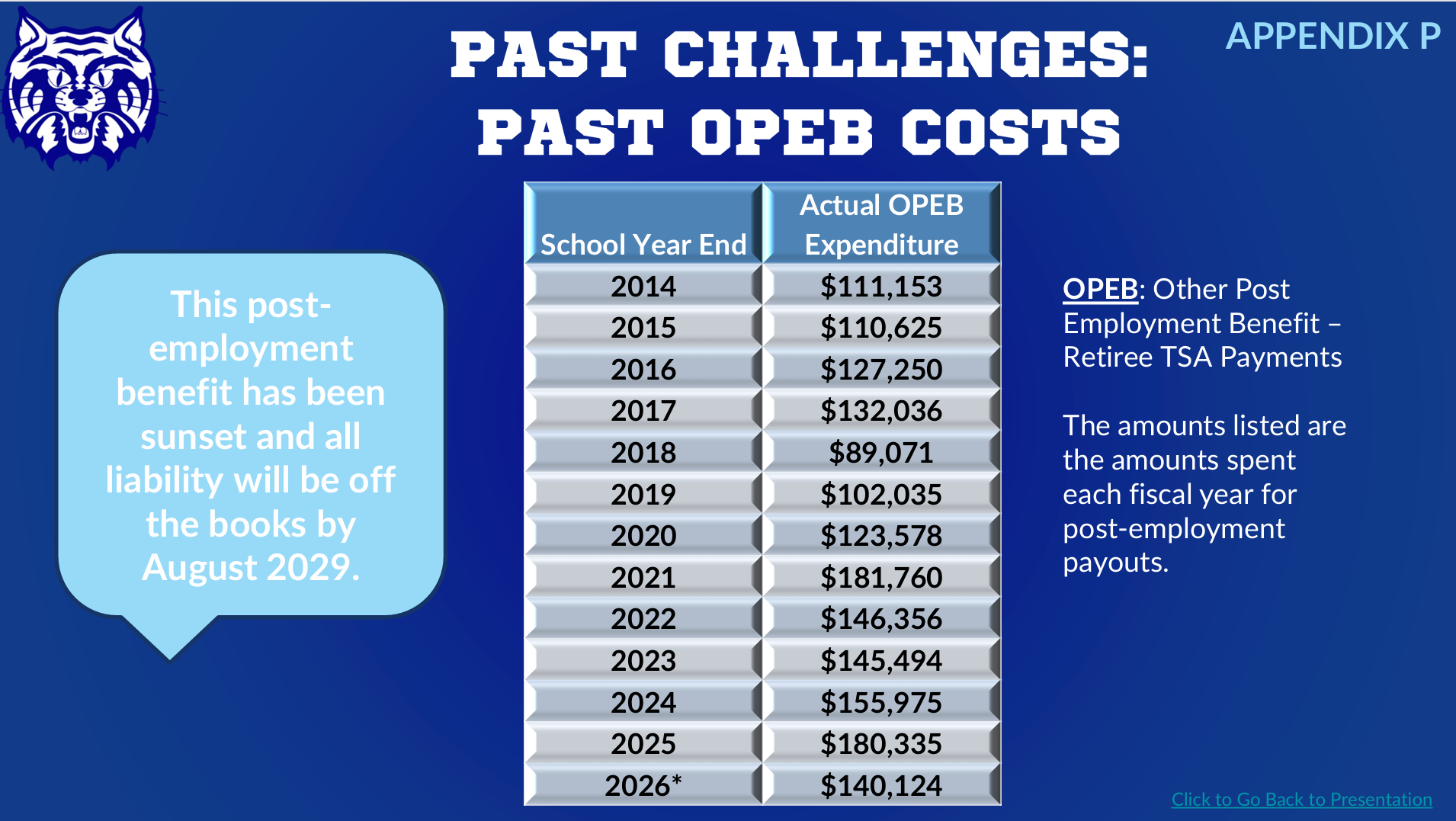
Source: Lake Country School District, “Financial State of the District” presentation, December 2025
Clarifying Leadership Timing
For clarity and fairness, it is important to note that the current superintendent joined the district in the 2022–23 school year.
The structural decisions referenced above occurred prior to his tenure and were inherited by the current leadership team.
Course Correction Began in 2023–24
Beginning in the 2023–24 school year, the current board and administration began implementing significant corrective actions to address long-standing financial challenges, including:
More than $1.6 million in budget reductions
Staffing alignment with enrollment
Restructuring benefits, including sunsetting OPEB obligations
Operating more leanly while maintaining educational quality
These steps were necessary to stabilize the district. But they also resulted in difficult and visible cuts.
Why the Referendum Fits Into This Moment
The operational referendum is not about revisiting past decisions.
It is about:
Stabilizing the district after corrective actions were taken
Maintaining current programs and staffing while long-term solutions are explored
Ensuring future decisions are made with stronger financial discipline, transparency, and community involvement
This moment reflects a course correction, not a continuation of past practices.
This information is shared to provide transparency and context using publicly presented district data. It is intended to help our community understand how decisions over time shaped the current financial landscape — and why a thoughtful, locally controlled path forward matters now. It is not intended to assign blame.
Have questions about how this history connects to the upcoming vote?
Visit our Frequently Asked Questions page for details about the referendum.